Peyote is slow, sacred and under pressure
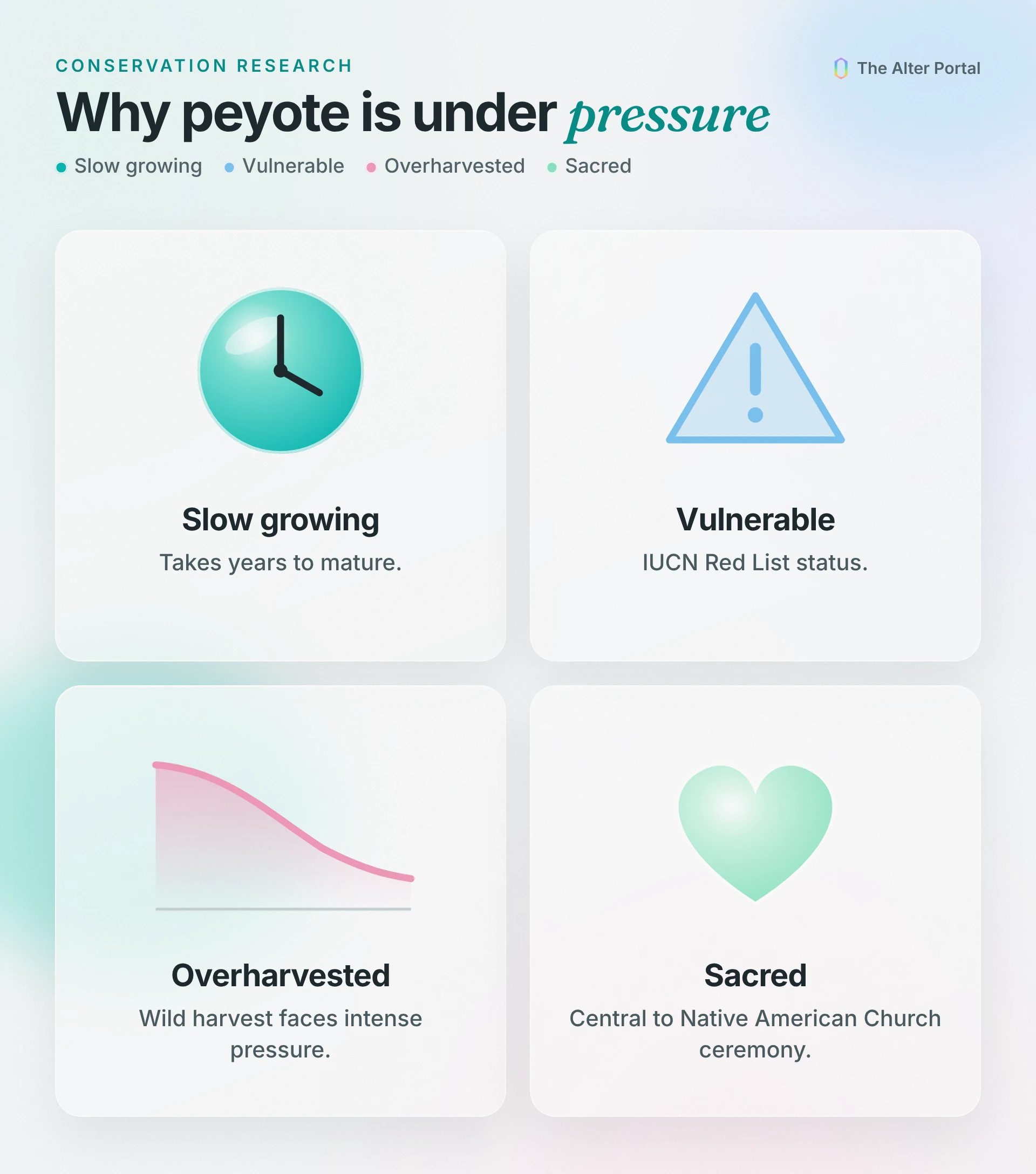
Peyote takes years to grow, is central to Native American Church ceremony, and is in decline. Psychedelic hype makes the pressure worse.
 By Marlin Charmil · · 5 min read
Peyote, Lophophora williamsii, is a small spineless cactus from northern Mexico and southern Texas that contains mescaline. It has been used ceremonially for a very long time and is a sacrament in the Native American Church.
A vulnerable species
Peyote is listed as vulnerable on the IUCN Red List and is a species of conservation concern because of habitat destruction combined with legal and illegal harvesting [1]. In the United States it grows wild only in Texas, yet it is not listed under the US Endangered Species Act [1].
Harvest faster than it grows
Researchers at Sul Ross State University and the Cactus Conservation Institute have argued that the current system, which relies on harvesting wild plants, involves intense overharvesting, and that cultivation could help wild populations survive [2]. They also describe the regulatory, economic and biological hurdles that make legal cultivation a long-term undertaking [2].
Why hype matters
Rising interest in mescaline and “plant medicine” can add pressure on a slow-growing species and on communities for whom it is sacred. Many Indigenous and conservation voices ask non-Native people to leave peyote alone. Mescaline can be made synthetically, and other cacti exist, but the core point is respect: popularity should not cost a culture its sacrament.
This article is educational. It is not medical advice and does not encourage anyone to take any drug.
The Alter Portal covers research and culture. Nothing here is medical advice or encouragement to use drugs. Read on the interactive site →