The psilocybin meta-analysis that had to be corrected
A 2024 BMJ review reported a huge effect of psilocybin on depression. Within days it carried an expression of concern. Here is what happened.
 By Marlin Charmil · · 6 min read
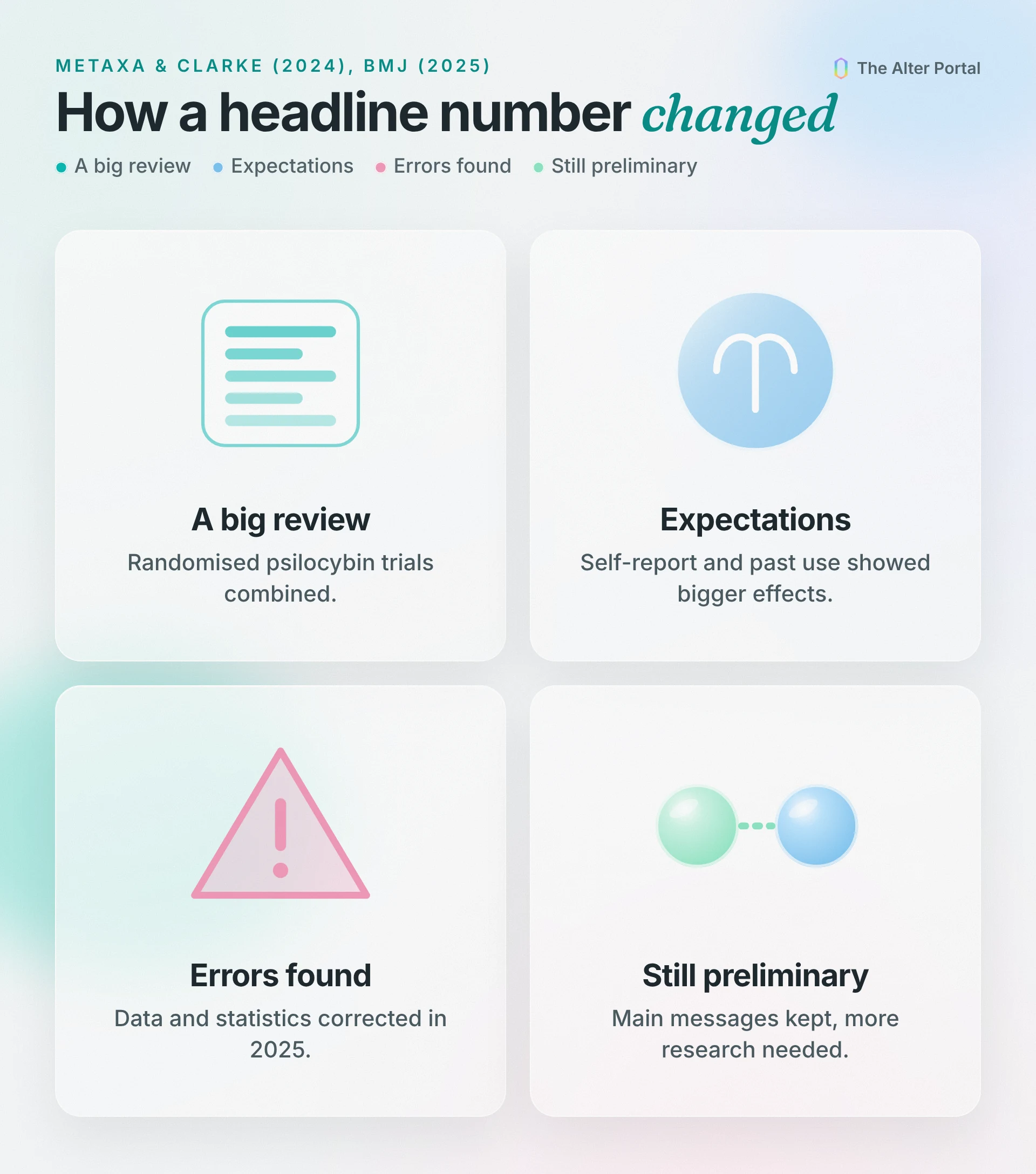
Meta-analyses combine results from several trials to give a bigger picture. In May 2024 the BMJ published one by Athina-Marina Metaxa and Mike Clarke on psilocybin for depression [1]. It reported a large overall benefit compared with control treatments [1].
What it said about expectations
One of the most interesting findings was where the effects looked biggest: in people with depression linked to another condition, when depression was measured with self-report questionnaires, and in people who had used psychedelics before [1]. The authors said more research was needed to understand expectancy effects, because people who know psilocybin can often tell when they have received it [1].
The correction
Soon after publication, the journal flagged concerns. In February 2025 it published a correction. The authors agreed there had been errors in extracting data, in handling standard deviations and standard errors, in the type of effect size calculated, and in counting results from the same study more than once [2]. The estimates were recalculated and checked by the journal’s statistical editors, and the correction states that the main messages remain unaltered and that the review is preliminary [2].
Why this matters
A single headline number can travel fast even when it later changes. This case shows why it is worth checking for corrections, reading how outcomes were measured, and asking how much of an effect might come from people knowing what they took.
This article is educational. It is not medical advice and does not encourage anyone to take any drug.
The Alter Portal covers research and culture. Nothing here is medical advice or encouragement to use drugs. Read on the interactive site →