Ketamine and the bladder: a harm worth knowing about
Ketamine is used in clinics for depression. Heavy recreational use is linked with a different story: serious damage to the urinary tract.
 By Marlin Charmil · · 5 min read

Ketamine is an anaesthetic that is also being studied and used for depression in controlled medical settings. Outside those settings, regular recreational use has been linked with a condition called ketamine-induced uropathy, damage to the bladder and urinary tract [1].
What it looks like
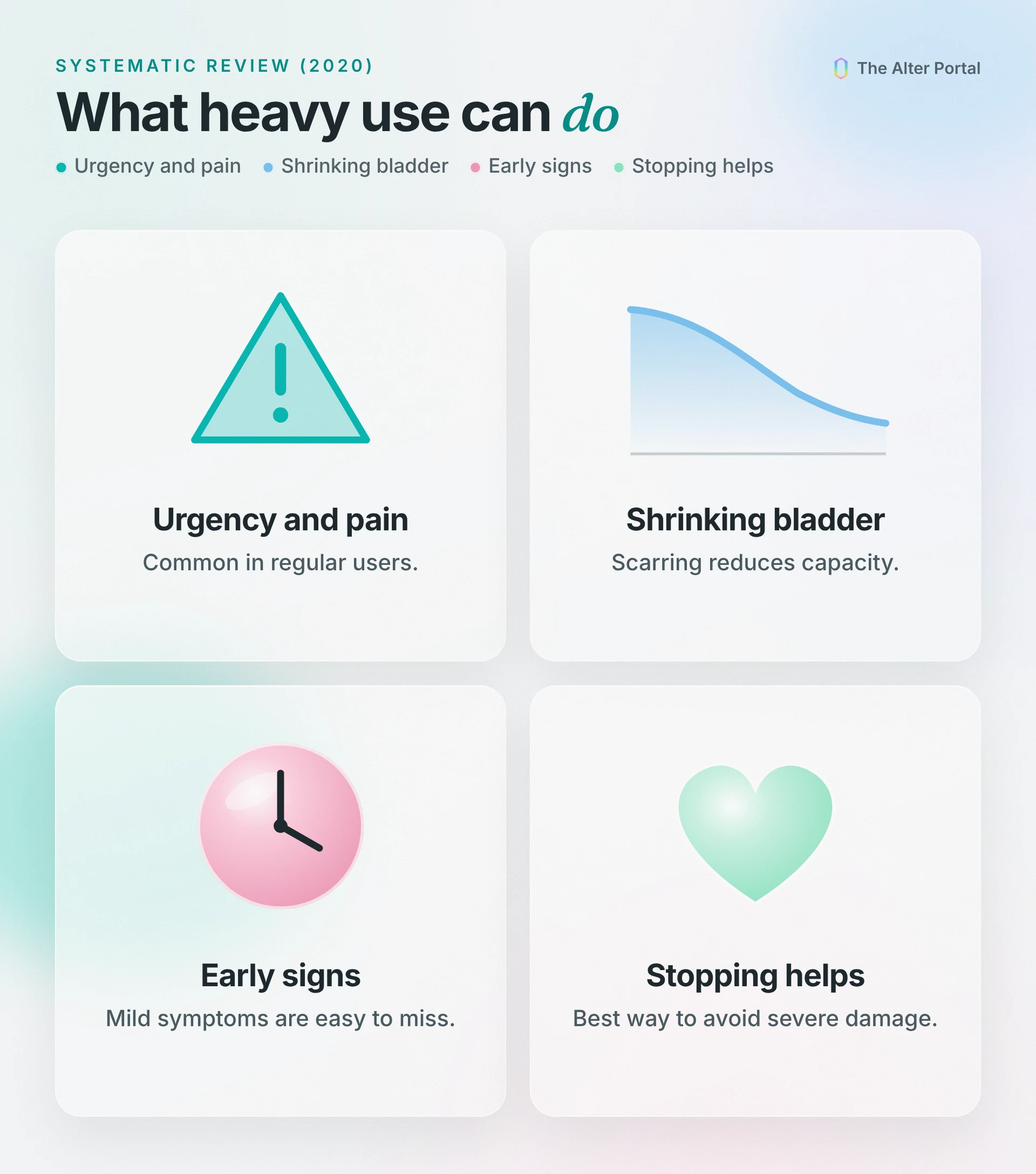
A 2020 systematic review describes regular users experiencing severe urinary urgency and frequency, and pelvic pain [1]. In long-term use, the bladder can become contracted and scarred, and kidneys can swell when urine backs up [1]. Camera examinations show an ulcerated, inflamed bladder lining [1].
Why early signs matter
Infrequent users may only notice mild, cystitis-like symptoms and may not link them to ketamine [2]. Stopping before damage becomes severe is described as the best way to avoid the major reconstructive surgery needed in end-stage disease [2]. In the UK, ketamine was reclassified to a stricter category in 2014 partly because of this evidence [3].
Clinic vs street
This harm has been reported mainly with frequent, heavy, unsupervised use, which is very different from occasional supervised medical treatment. But it is a serious risk, and one people often do not hear about. If you are worried about your own use, see Where to get help, or speak to a doctor.
This article is educational. It is not medical advice and does not encourage anyone to take any drug.
The Alter Portal covers research and culture. Nothing here is medical advice or encouragement to use drugs. Read on the interactive site →