The ecstasy study that used the wrong drug
In 2002 a top journal published a shock finding about MDMA and brain damage. A year later it was retracted. The reason was a mislabelled bottle.
 By Marlin Charmil · · 5 min read

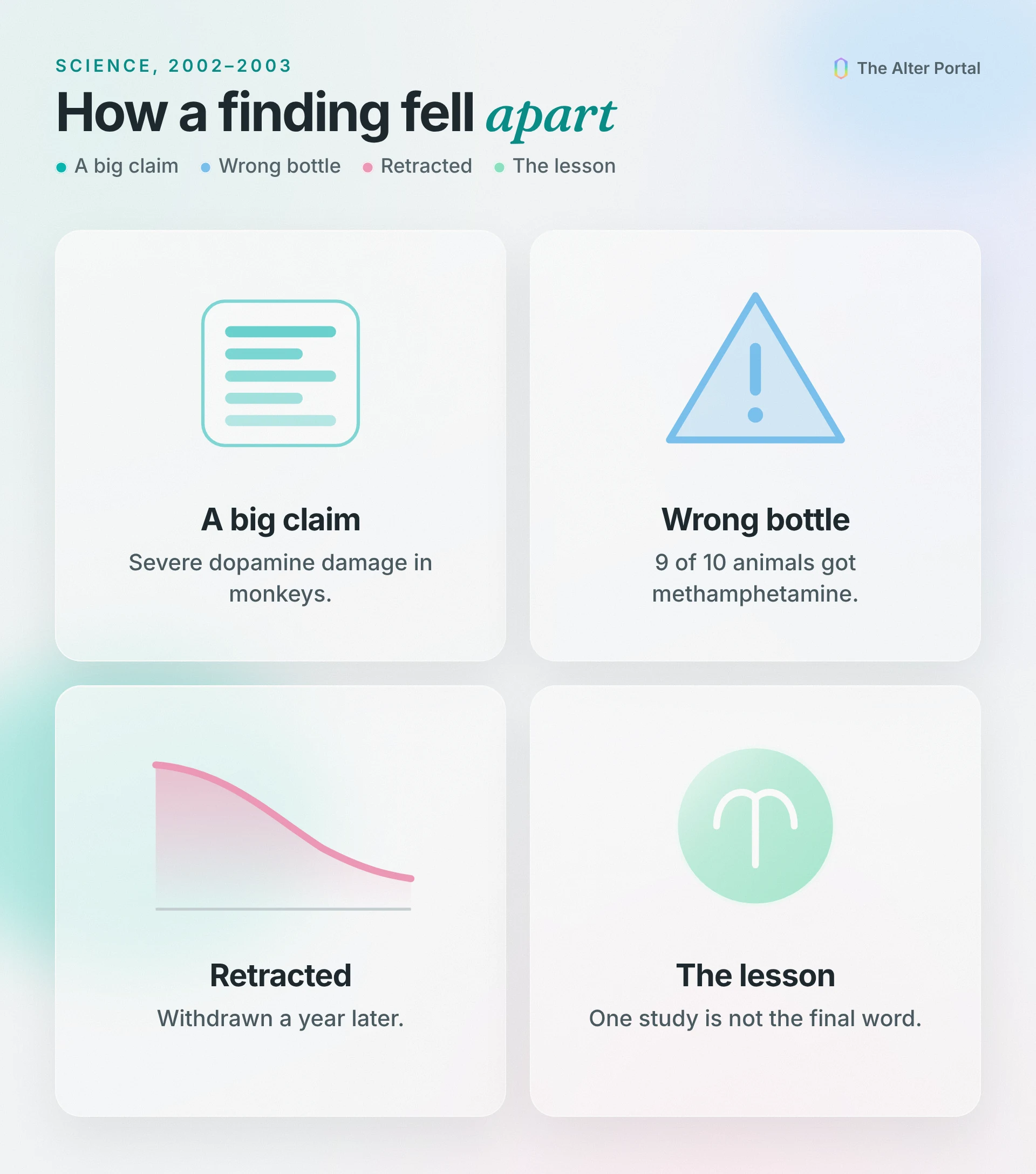
In September 2002 the journal Science published a study by George Ricaurte and colleagues at Johns Hopkins. It reported severe damage to dopamine neurons in monkeys after doses of MDMA said to resemble a typical night of recreational use [1]. The finding was a surprise, because MDMA mainly acts on serotonin, not dopamine, and it drew wide attention.
The retraction
A year later the authors retracted the paper. They explained that nine of the ten animals had received methamphetamine instead of MDMA, because of a mislabelled bottle [1]. They noted that methamphetamine would be expected to produce the kind of damage they had seen [2].
Why it still matters
The retraction raised questions about how such a striking result passed peer review [1]. It also reminds us that headlines about any drug, in either direction, deserve a second look. A single study, however prestigious the journal, is not the final word until others can reproduce it.
What it does not mean
The retraction does not prove that MDMA is harmless. Questions about its effects on the brain, especially with heavy or repeated use, are still being studied. It means this particular study tells us nothing about MDMA, because it was not studying MDMA.
This article is educational. It is not medical advice and does not encourage anyone to take any drug.
The Alter Portal covers research and culture. Nothing here is medical advice or encouragement to use drugs. Read on the interactive site →