Who gets studied? The diversity gap in psychedelic trials
A 2018 review found that more than eight in ten psychedelic therapy participants were non-Hispanic white. That matters for everyone else.
 By Marlin Charmil · · 5 min read

Psychedelic therapy research has grown fast. But who is in these trials shapes who the results apply to. In 2018 Timothy Michaels, Monnica Williams and colleagues reviewed psychedelic-assisted therapy studies published between 1993 and 2017 [1].
The numbers
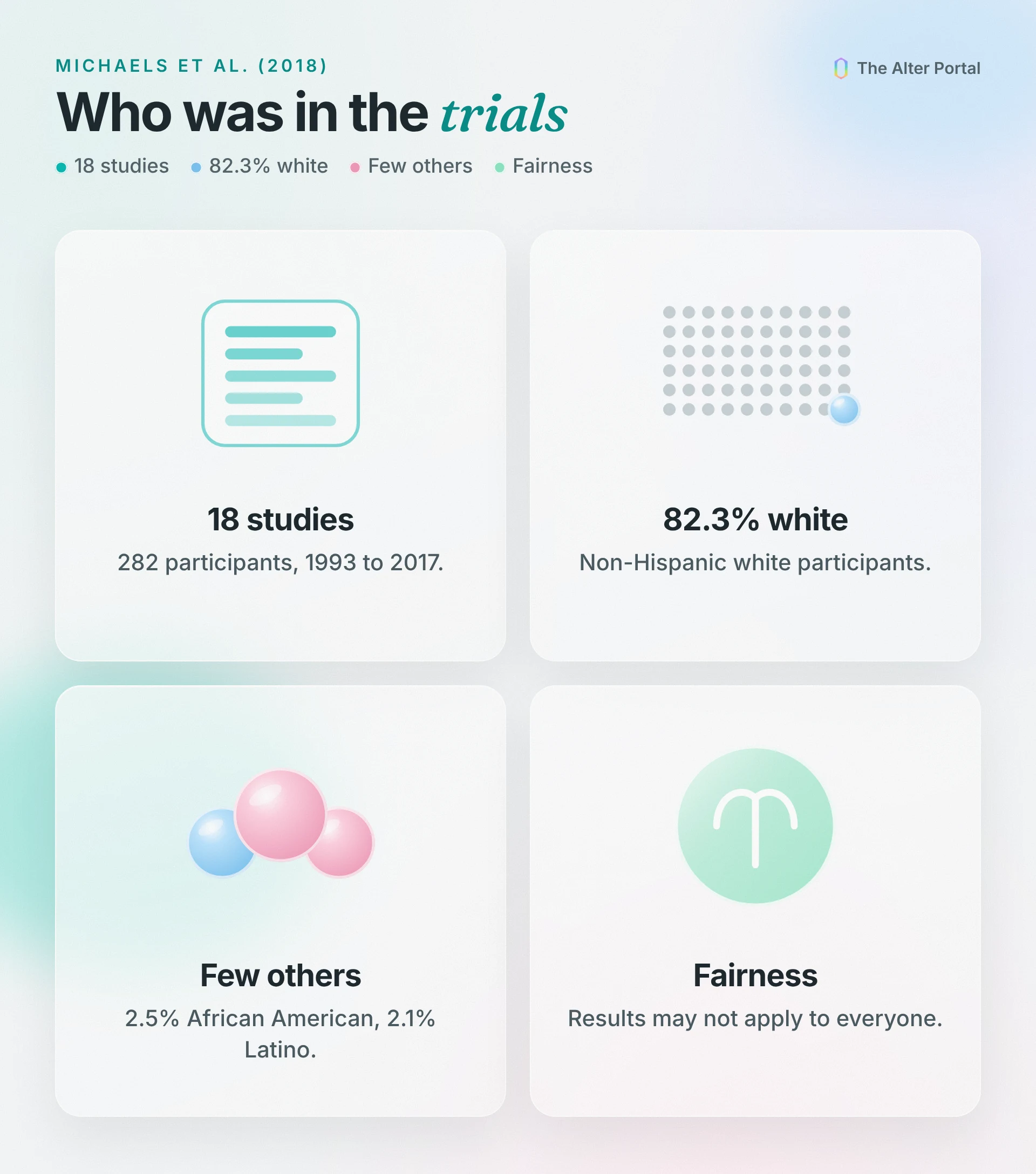
Of 18 studies that met their criteria, with 282 participants in total, 82.3% of participants were non-Hispanic white. Only 2.5% were African American, 2.1% Latino and 1.8% Asian [1].
Why it matters
The authors argued that because minorities were so underrepresented, reported treatment outcomes may not apply to people of colour [1]. Experiences of racism, trauma, trust in medicine and the setting of a session can all shape how psychedelic therapy feels and works. A treatment tested mainly on one group is not yet tested for everyone.
What could change
The review called for better inclusion and recruitment strategies, so that everyone has an equal chance to take part and benefit [1]. It also noted that this field owes much to Indigenous healing traditions, which makes the gap more striking. Newer trials have started to report diversity more carefully, but closing the gap takes deliberate effort.
This article is educational. It is not medical advice and does not encourage anyone to take any drug.
The Alter Portal covers research and culture. Nothing here is medical advice or encouragement to use drugs. Read on the interactive site →