5-MeO-DMT for depression: a very fast, very early signal
A short-acting psychedelic from the toad and plant world was tested in 16 people with hard-to-treat depression. The results came within hours.
 By Marlin Charmil · · 5 min read

5-MeO-DMT is a short-acting psychedelic found in some plants and in the secretion of one toad species. Its effects start within seconds and usually last minutes, not hours [1]. That short duration interests researchers, because it could make sessions far easier to run than with longer psychedelics.
The trial
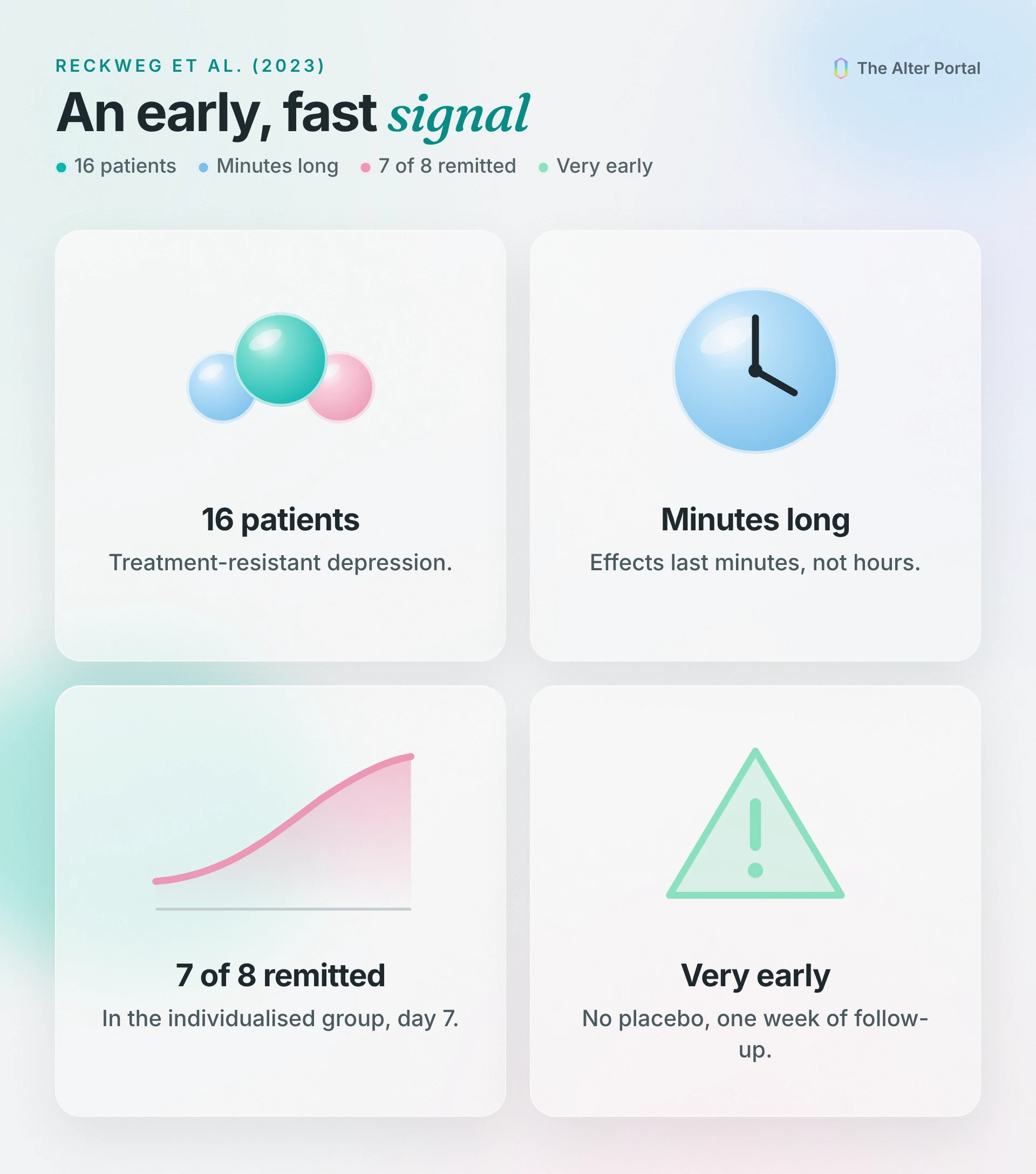
In 2023 a team at Maastricht University, with the company GH Research, published a phase 1/2 trial of an inhaled form of 5-MeO-DMT called GH001 in 16 adults with treatment-resistant depression [1]. The second phase tested an individualised approach, where each person could receive up to three doses on a single day [1].
What they saw
The drug was well tolerated [1]. In the individualised group, seven of eight patients were in remission on a standard depression scale seven days later [1]. All remissions appeared from the first day, and most within two hours [1].
Why to stay cautious
Sixteen people, no placebo group and a one-week follow-up are not enough to call this a treatment. The trial was partly run by the company developing the drug. And 5-MeO-DMT is extremely intense, which carries its own risks outside medical settings. Larger controlled trials are needed to see whether the effect is real and lasting.
This article is educational. It is not medical advice and does not encourage anyone to take any drug.
The Alter Portal covers research and culture. Nothing here is medical advice or encouragement to use drugs. Read on the interactive site →