Ibogaine and the heart: why caution comes first
Ibogaine has a reputation for interrupting addiction. It also has a well-documented risk to the heart. Here is what the research shows.
 By Marlin Charmil · · 5 min read
Ibogaine comes from the root bark of the iboga shrub in Central Africa. It has drawn attention for possible anti-addictive effects, seen in animal studies and in anecdotes from people [1]. A former US addiction research leader once described its unregulated use as “a vast, uncontrolled experiment” [1].
The heart problem
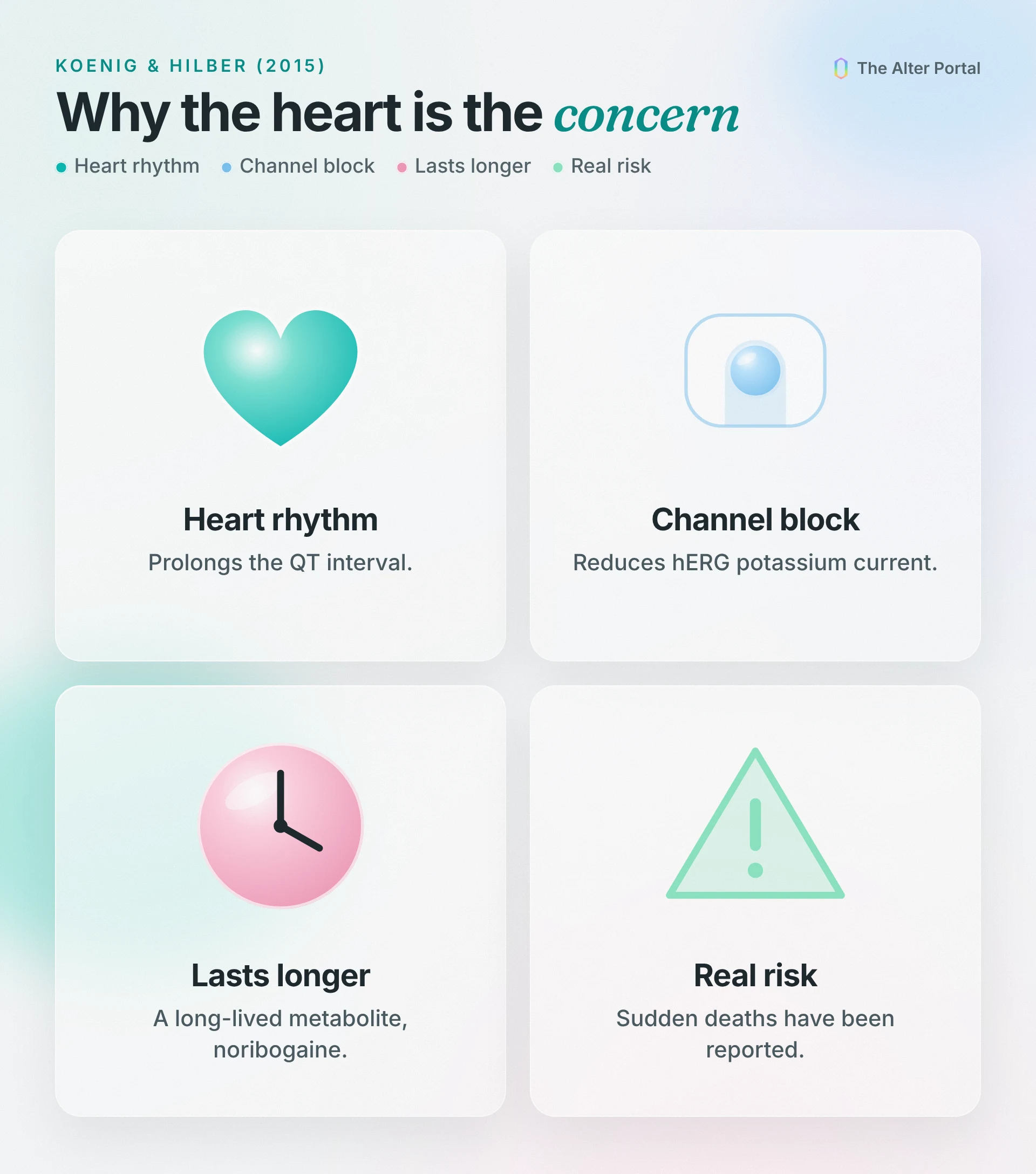
Reports of life-threatening complications and sudden deaths linked in time to ibogaine have been accumulating [1]. These have been tied to ibogaine’s tendency to prolong the QT interval on an ECG, a sign of slowed electrical recovery in the heart that raises the risk of dangerous rhythms [1].
The mechanism
In 2012 researchers in Vienna showed that ibogaine, at concentrations relevant to treatment, reduces the current through hERG potassium channels in the heart [2]. Blocking these channels is a known way that medicines can trigger arrhythmias. Ibogaine also has a long-lived active metabolite, noribogaine, which may extend its effects [1].
Why this matters now
Interest in ibogaine is rising, including for veterans and people with opioid addiction. Heart risk is one reason it is so important that any use happens only in proper research with medical screening and monitoring. Anyone considering it outside such settings should know that the risk is real and can be fatal.
If you or someone near you is in trouble, see Where to get help.
This article is educational. It is not medical advice and does not encourage anyone to take any drug.
The Alter Portal covers research and culture. Nothing here is medical advice or encouragement to use drugs. Read on the interactive site →