“Meeting God”: what 4,285 people described
A Johns Hopkins survey compared encounters with God or “ultimate reality” that happened on their own with those during psychedelic experiences.
 By Marlin Charmil · · 6 min read
People have described encounters with God or a higher presence for thousands of years. Some happen out of nowhere. Others happen during psychedelic experiences. In 2019 Roland Griffiths and colleagues at Johns Hopkins compared the two systematically for the first time [2].
The survey
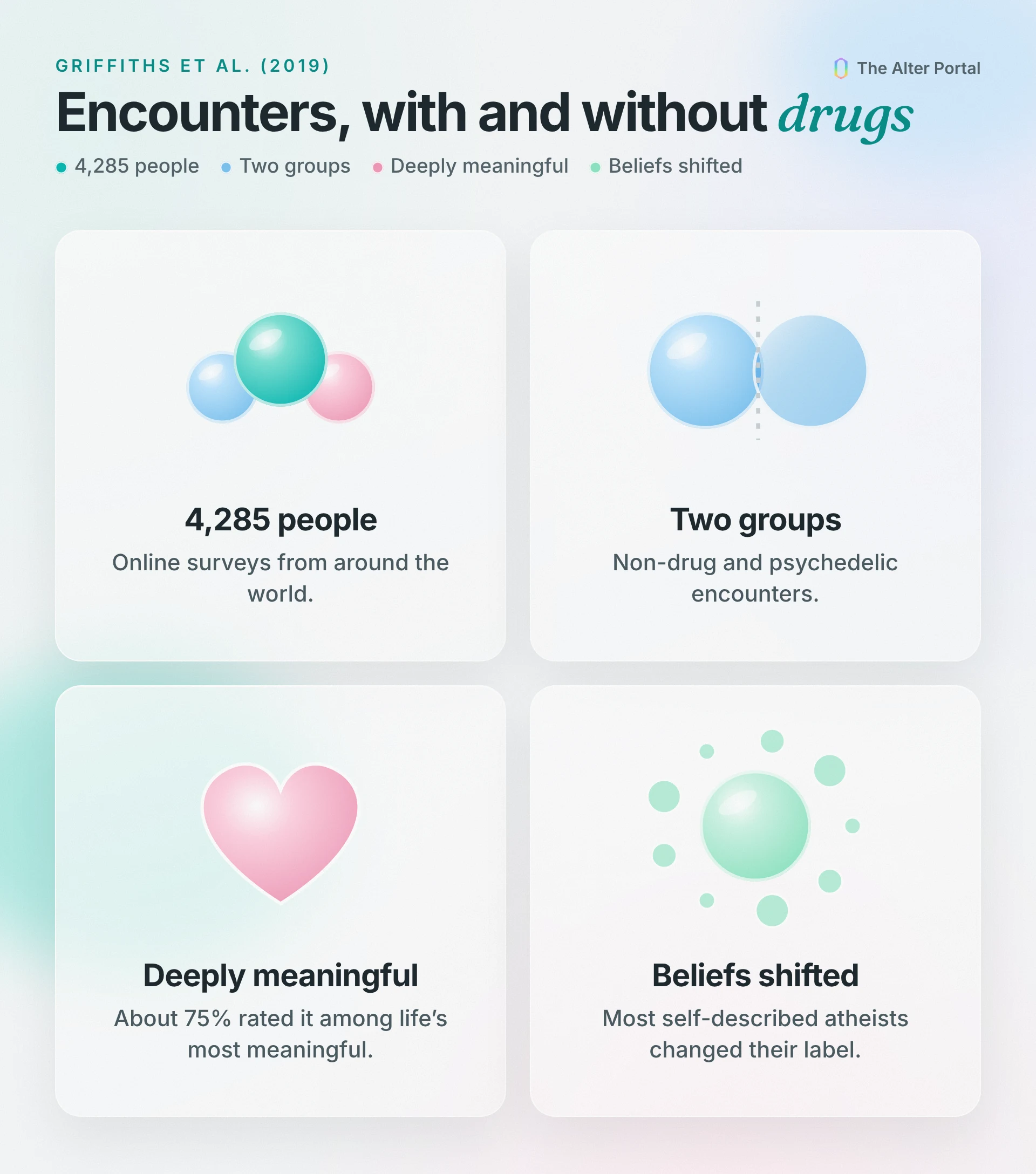
4,285 people from around the world completed detailed online surveys about their single most memorable encounter [2]. They were split into a non-drug group and groups whose experience happened with psilocybin, LSD, ayahuasca or DMT [1].
What people reported
About three-quarters of respondents in both the non-drug and psychedelic groups rated the encounter among the most meaningful and spiritually significant experiences of their lives [2]. The non-drug group was the most likely to call what they met “God”, while psychedelic groups more often used phrases like “ultimate reality” [1]. More than two-thirds of people who had identified as atheist before the experience no longer did afterwards [1]. Overall, the authors found the similarities between groups more striking than the differences [1].
Reading this carefully
People answered online adverts, so those with powerful positive stories may be over-represented. Memories of intense events can also change over time. The survey tells us how people describe and interpret these experiences, not what, if anything, they actually encountered. That question remains open, and personal.
This article is educational. It is not medical advice and does not encourage anyone to take any drug.
The Alter Portal covers research and culture. Nothing here is medical advice or encouragement to use drugs. Read on the interactive site →