Psilocybin “scrambles” the brain’s self network, for a while
A 2024 Nature study scanned the same people again and again before, during and after psilocybin. The disruption was huge, and one change lasted weeks.
 By Marlin Charmil · · 6 min read
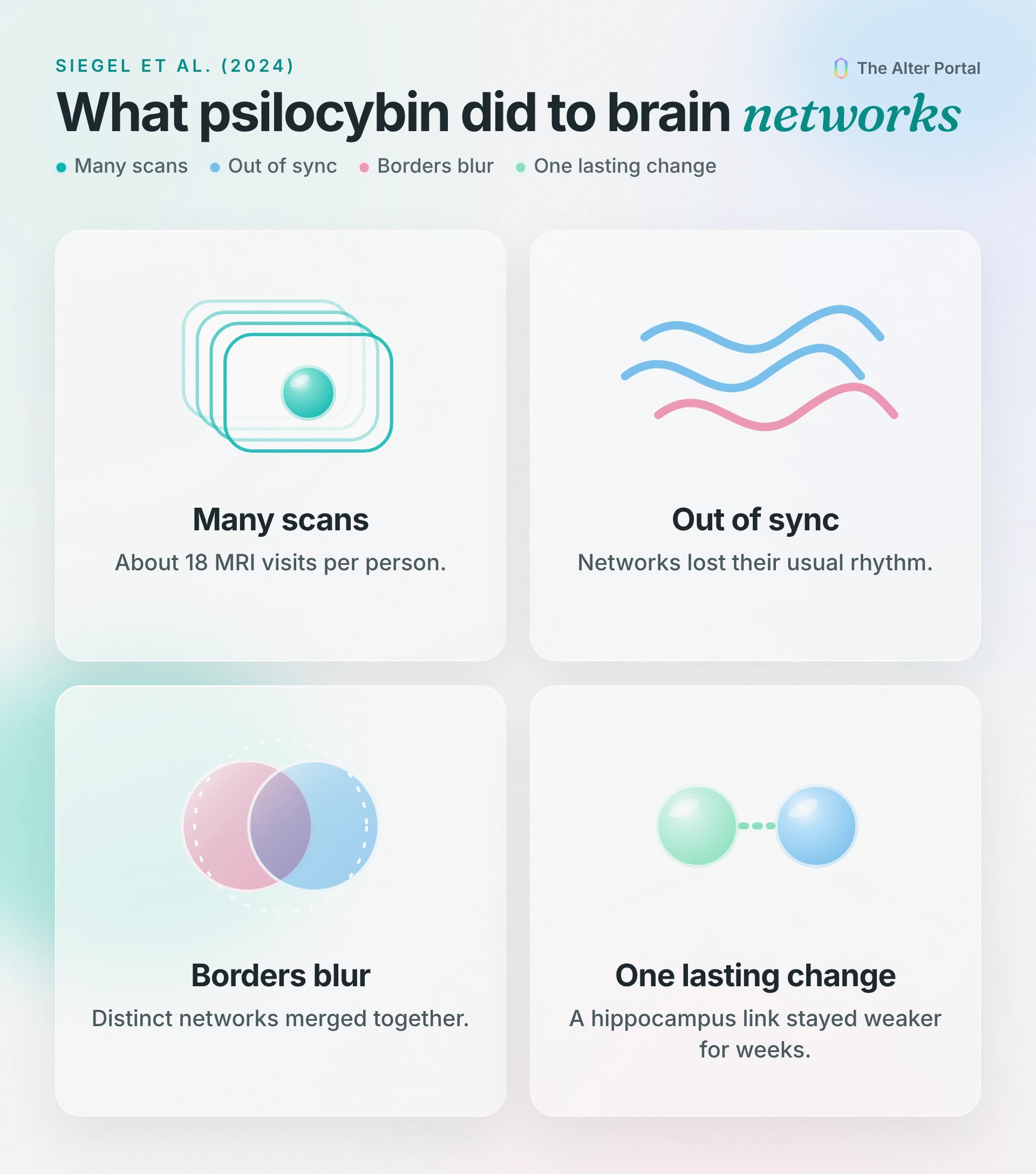
Most brain-imaging studies of psychedelics scan people once or twice. In 2024 a team at Washington University in St Louis did something different: they scanned each volunteer about 18 times, building a detailed personal map of their brain networks before, during and for weeks after psilocybin [1].
A massive acute shake-up
During the drug, psilocybin disrupted functional connectivity across the cortex and deeper structures, producing more than three times the change caused by a comparison stimulant, methylphenidate [1]. The disruption came from brain activity falling out of sync: correlations within networks weakened and the usual push-and-pull between networks faded, so networks blurred into each other [1].
The default mode network took the biggest hit
The strongest changes were in the default mode network, a set of regions active when we daydream, remember and think about ourselves [1]. That fits with how often people describe a loosened sense of self.
One change lingered
Most of the disruption faded after the drug wore off. But the connection between the anterior hippocampus and the default mode network stayed weaker for weeks [1]. The authors suggest this could be one brain-level trace of the plasticity and therapeutic effects people talk about [1].
Keep in mind
This was a small group of healthy adults, studied very intensively. It shows what changes, not yet whether those changes cause any benefit.
This article is educational. It is not medical advice and does not encourage anyone to take any drug.
The Alter Portal covers research and culture. Nothing here is medical advice or encouragement to use drugs. Read on the interactive site →